
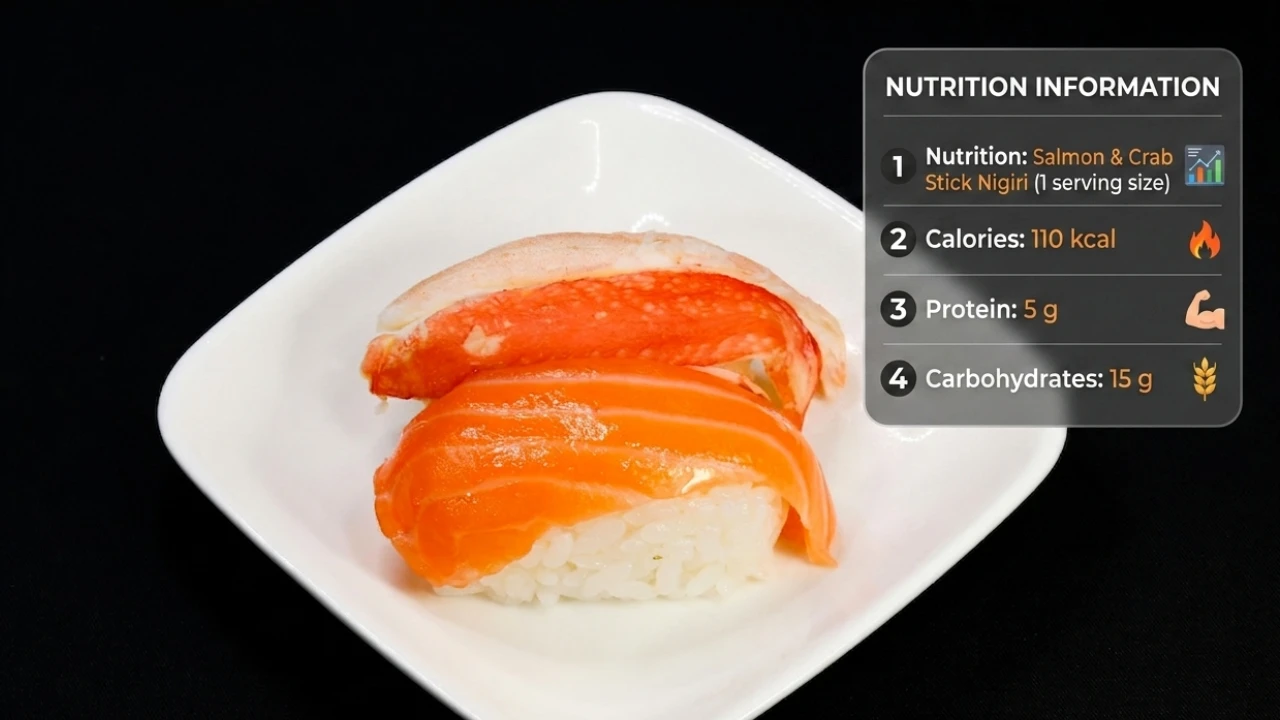
I love rice dishes, and one of my favorites dishes is Nigiri sushi. It is made by wrapping seaweed around cooked rice, raw or cooked fish, vegetables, and other ingredients. It is very delicious and nutrient-rich. If we talk about sushi’s nutritional facts, some sushi can be high in calories, sodium, and unhealthy fats.
So, in this post, USALUXO Team will be share with you the Sushi Nutrition Facts: Benefits, Risks, and Best Healthy Choices.
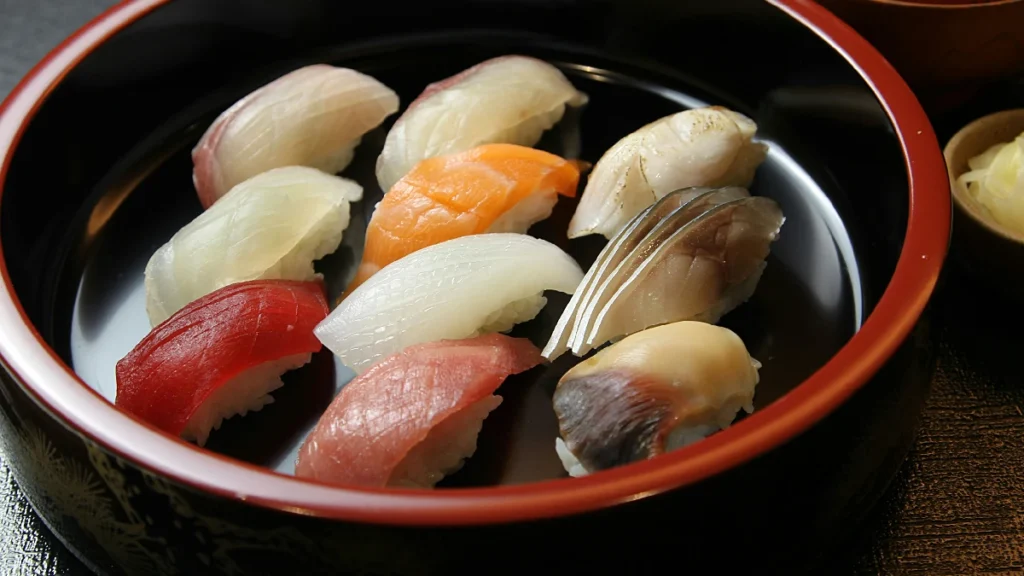
What Is Sushi?
Sushi is one of the most popular dishes in Japan. It’s a type of rice cooked with vinegar and salt to taste, creating a tasty dish. You will find two types of sushi rice—brown and white. Brown rice sushi is typically healthier, as it is richer in fiber, protein, and essential nutrients. Additionally, white rice loses most of its nutrients because its outer layers are removed. I love brown sushi rice because it doesn’t spike blood sugar as much and keeps me satisfied longer.
In my opinion, there are five popular types of sushi.
Nigiri:
Nigiri sushi is a traditional Japanese dish. It is not made by rolling, instead a thin slice of raw fish or seafood is served on top of a small mound of hand-pressed rice.
Maki:
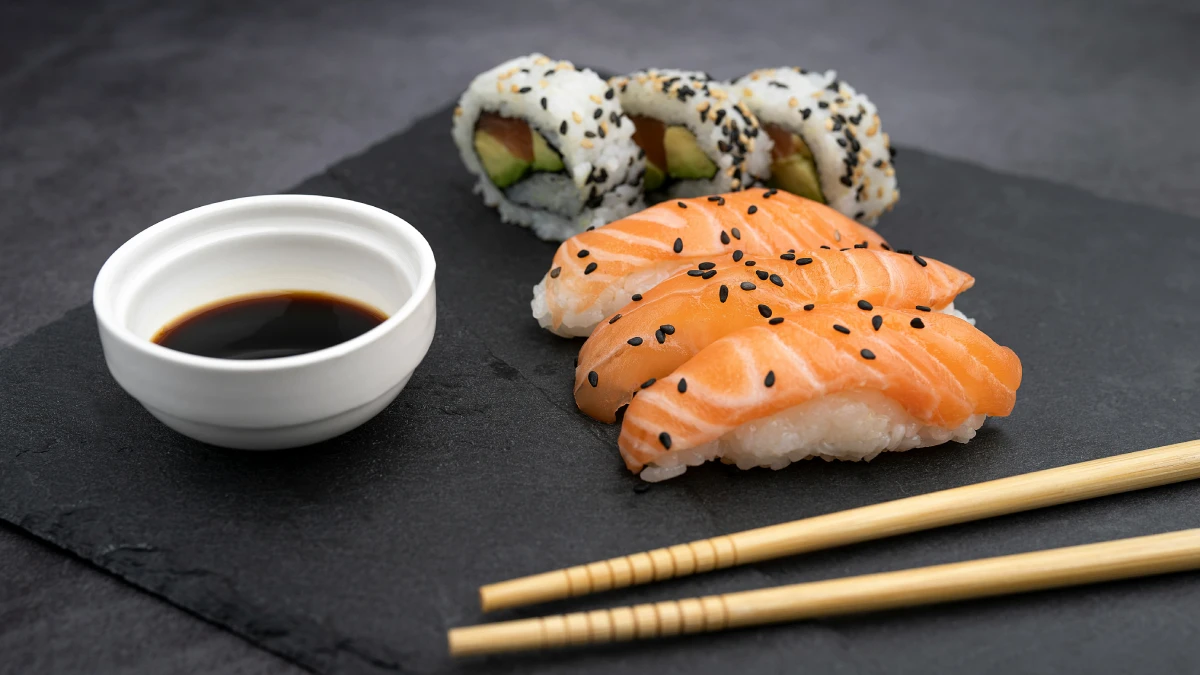
Maki is a classic form of Japanese rolled sushi. This luxury dish is made by wrapping vinegared sushi rice and a sheet of nori seaweed.

Samhimi:
Samhimi’s magnificent dish is a sushi variant served without rice. It is made with a thin slice of raw fish or seafood. Before testing this dish, it is usually prepared by mixing in ingredients such as soy sauce, wasabi, and daikon radish.
Temaki:
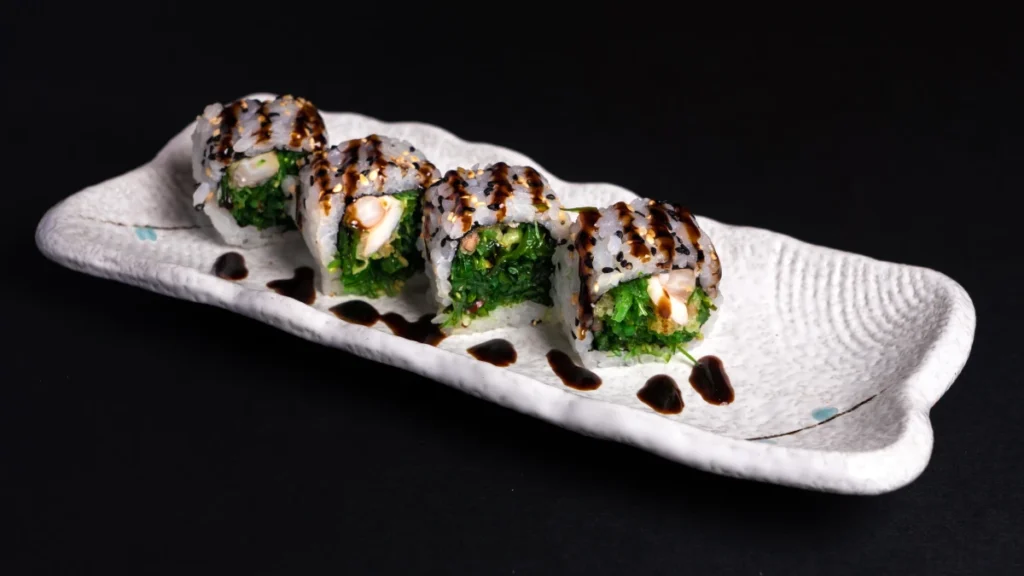
In Japanese, ‘temaki’ literally means hand-rolled. It has the appearance of an ice cream cone.

Uramaki:
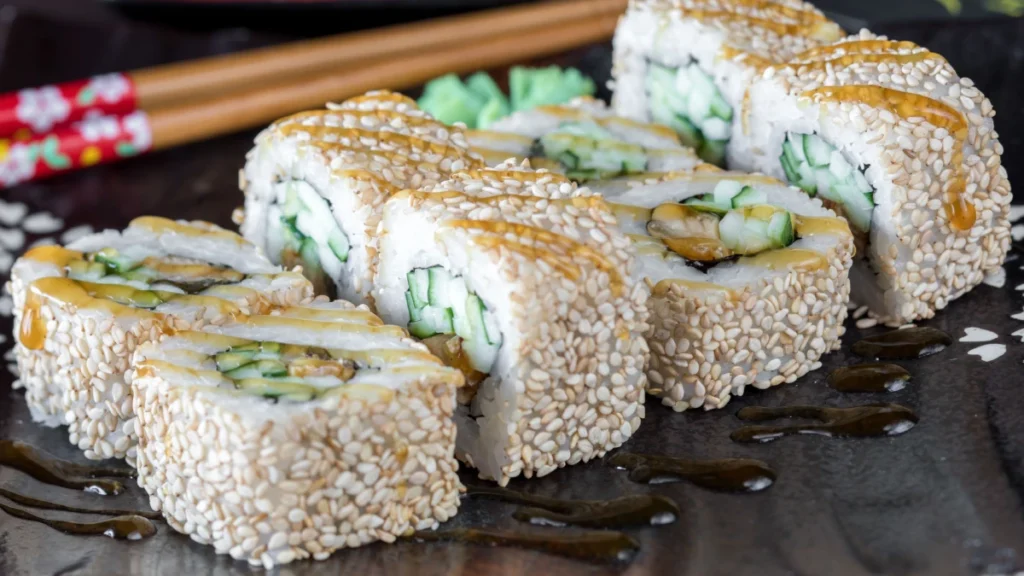
Uramaki sushi is one of the most popular dishes worldwide. Known as an “inside-out” roll, it features seasoned sushi rice on the outside, covering the nori seaweed and the main filling inside.
Sushi Nutrition Facts
Nutritional value depends on the type of sushi and the ingredients used. A single package of the Vegetable Combo 10-piece sushi roll typically contains the following ingredients:
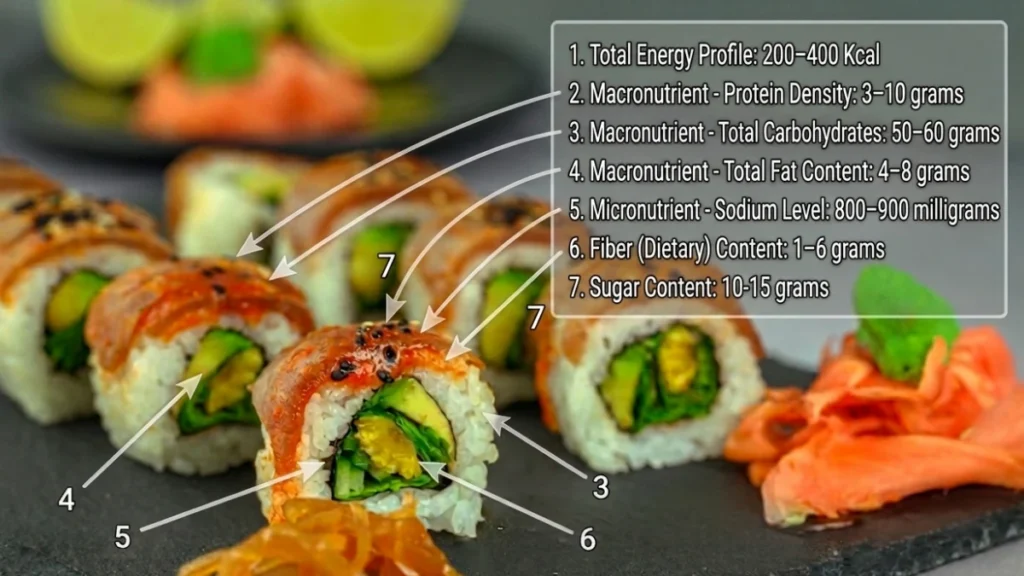
- Calories: 200–400 Kcal
- Protein: 3–10 grams
- Carbohydrates: 50–60 grams
- Fat: 4–8 grams
- Sodium: 800–900 milligrams
- Fiber: 1–6 grams
- Sugar : 10-15 grams
Fish or non-veg sushi offers high-quality protein and healthy omega-3 fatty acids, whereas vegetables provide fiber, vitamins, and minerals. Rice provides energy through carbohydrates.
Is Sushi Healthy?
Yes, sushi may be a healthy dish if it’s made with nutritious ingredients and the amount of ingredients used is limited. Often, traditional sushi includes protein, healthy fats, and vegetables packed with nutrients. Brown rice sushi is better for a healthy diet because it contains higher levels of fiber, antioxidants, vitamins, and minerals compared to white rice.
Choosing the right type of sushi is key to maximizing health benefits.
Health Benefits of Sushi
1. Excellent Source of Protein
As per the U.S. Food and Drug Administration (FDA), fish and seafood provide high-quality protein, making them essential for muscle development and overall body repair.
Popular sushi fish like tuna and salmon contain significant amounts of protein while being low in calories.
2. Rich in Omega-3 Fatty Acids
Rainbow Rolls are made with salmon, shrimp, and tuna, making them a great source of omega-3 fatty acids. Eating this dish boosts heart health, improves brain function, benefits vision, and helps reduce inflammation. Regularly eating fish rich in omega-3 is linked to many long-term health benefits.
3. Provides Essential Vitamins and Minerals
The raw fish and seafood used in sushi contain almost the same vitamins and minerals, though the specific levels can vary depending on the type of fish. The ingredients used in sushi are rich in the following nutrients:
- Vitamin B12
- Vitamin D
- Selenium
- Iodine
- Iron
- Zinc
4. Low in Saturated Fat
Generally, even a standard sushi roll contains less fat than fried food or a burger. An Avocado Salad Roll contains only 4.5 grams of fat.
5. May Support Weight Management
Sushi is an excellent source of protein and vitamins. Protein promotes a feeling of fullness and can help curb the habit of overeating; consequently, it does not lead to weight gain.
Potential Risks of Eating Sushi
While sushi offers many benefits, there are some risks to consider.
1. High Sodium Content
Due to the high sodium content in soy sauce, excessive consumption can be harmful to health. Too much sodium in the body leads to high blood pressure and increases the risk of kidney failure. Therefore, reduce the use of sodium-rich soy sauce.
2. Raw Fish Safety Concerns
Always check safety concerns before eating raw fish or seafood dishes. It is crucial to handle and store raw fish or seafood correctly, as keeping them for too long carries the risk of bacterial or parasitic contamination. Therefore, always order sushi from reputable restaurants that comply with food safety regulations.
3. Hidden Calories in Specialty Rolls
Some restaurants turn healthy food into high-calorie meals in the name of special sushi rolls. Tempura-fried ingredients
- Spicy mayonnaise
- Cream cheese
- Sugary sauces
These additions can dramatically increase calorie and fat content.
Best Healthy Sushi Choices
If your goal is to enjoy healthy sushi, consider these options:
Best Choices
- Salmon nigiri
- Tuna nigiri
- Sashimi
- Cucumber rolls
- Avocado rolls
- Vegetable rolls
- Brown rice sushi
Simple sushi options are usually lower in calories and higher in nutritional value.
FAQs on Sushi Nutrition Facts:
What Is Sushi Rice?
Sushi is Japan’s most luxurious short-grain rice dish. Sushi is very tasty and also healthy. It is made with vinegar and salt. This dish is an excellent source of calories and carbohydrates.
For healthier options, some restaurants offer:
- Brown rice sushi
- Reduced-rice rolls
- Sashimi without rice
Is Sushi Gluten-Free?
Sushi is not always gluten-free. Gluten is a group of proteins primarily found in wheat, barley, and rye. To enhance the flavor of sushi, special sauces such as eel, teriyaki, and ponzu are used. Because traditional soy sauce is often added to these sauces, they contain gluten from the wheat. Other hidden sources of gluten include traditional soy sauce, imitation crab meat, and certain types of rice vinegar.
Common sources of gluten include:
- Traditional soy sauce
- Imitation crab meat
- Some marinades and sauces
How Long Does Sushi Last in the Fridge?
Sushi containing raw fish can be kept in the fridge for approximately 22–24 hours; beyond that, there is a risk of bacterial or parasitic contamination. However, cooked sushi can be stored in the fridge for about 48 hours.
Final Thoughts
Sushi is one of the most popular dishes in Japan. It is rich in nutrients, protein, healthy fats, vitamins, and minerals. Sushi is not only delicious to eat but also beneficial for health. However, not all sushi is equally healthy. The ‘special’ sushi served in some restaurants is not good for health because it contains high calories, sodium, and fat. Therefore, always buy sushi from a reputable restaurant, which is good for your health. Enjoying a good dish will keep your entire day delightful.